The Hollywood strikes — writers, then actors, then everything stopped
4. The Hollywood strikes — writers, then actors, then everything stopped
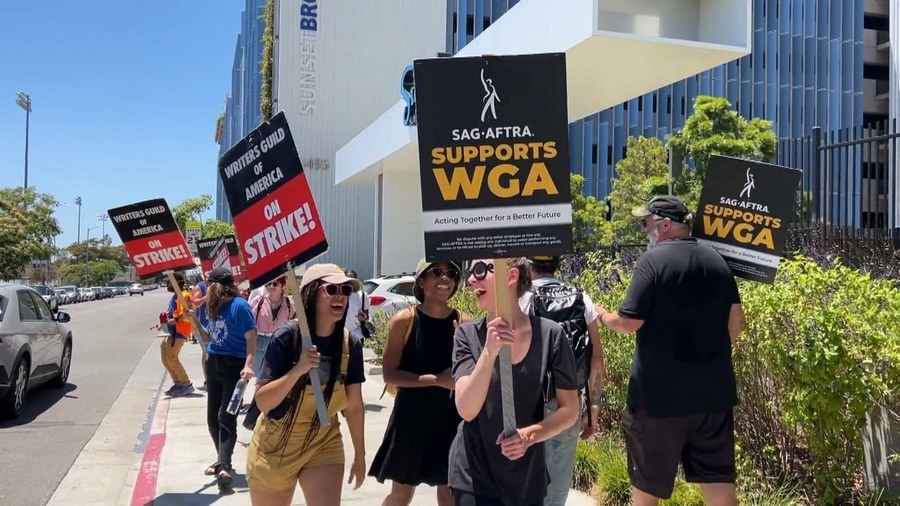
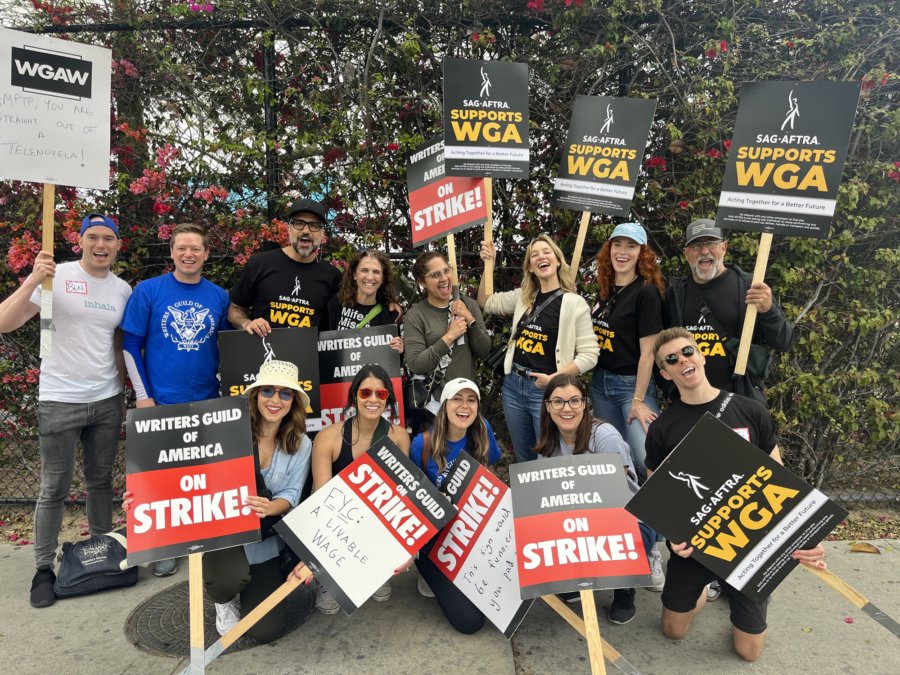
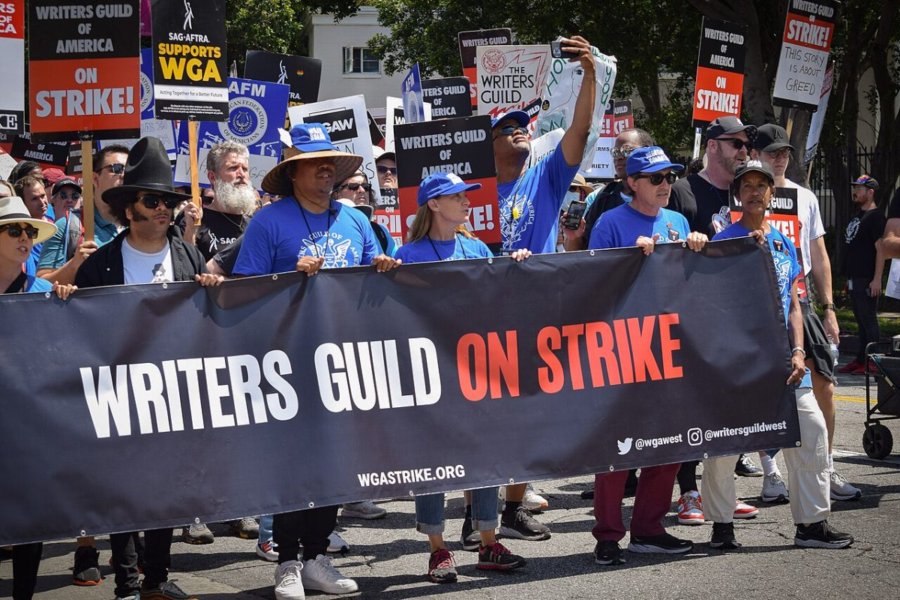
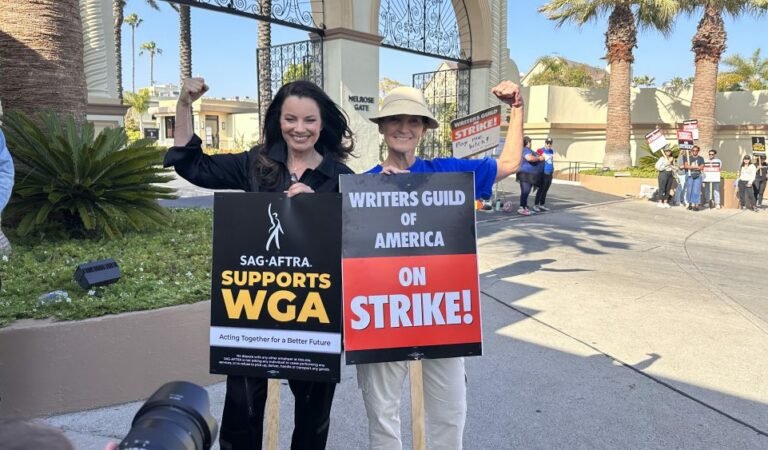
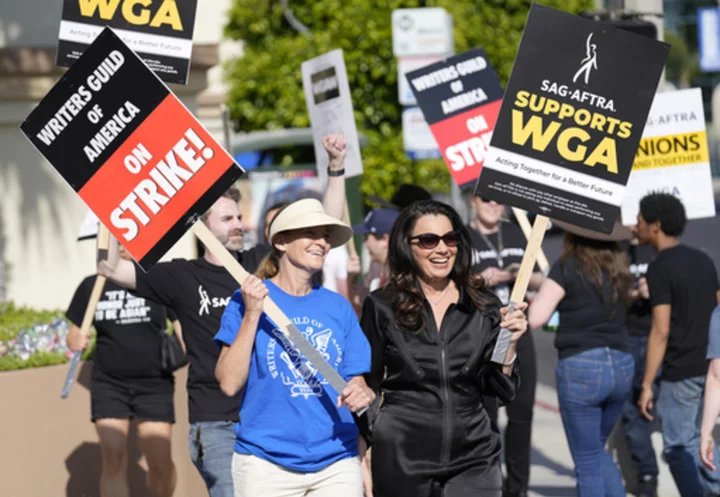
Image: strikes_2023.jpg — WGA picket line outside Sunset Bronson studios; picketers carry "Writers Guild of America on Strike" and "SAG-AFTRA Supports WGA" signs. Additional images: strikes_2023_2.jpg, strikes_2023_3.jpg, strikes_2023_4.jpg, strikes_2023_5.jpg
Writers walked out May 2, 2023. Actors followed July 14. The result was the first simultaneous writers/actors strike since 1960 — 148 days for the WGA (settled September 27), 118 for SAG-AFTRA (strike suspended November 9 after a tentative deal). The fights were about streaming residuals, writers'-room staffing minimums, and — in the year's most future-haunted demand — protections against artificial intelligence. The SAG deal's headline terms included AI consent-and-compensation guardrails and a streaming participation bonus — the first time the studios conceded that synthetic performers and algorithmic residuals were real bargaining terrain. For gossip, the strikes were an extinction event: no premieres, no press junkets, no late-night couch segments, no red-carpet fashion cycle. Fall awards campaigning froze. The celebrity content pipeline went dark for five months, and that darkness is the context for nearly every other story on this list — the reason concert tours, memes, and fan-shot video became the culture. It also turned picket lines into the year's strangest celebrity runway: A-listers holding signs in the Valley heat became their own paparazzi beat, and the AI fight planted a flag for every synthetic-media scandal that followed in later years.
Why it went viral: It was labor history happening to the most photographed workforce on earth — and it starved the content machine, forcing the audience to become the content machine.
Engagement signals: Global news dominance May–November; first dual strike in 63 years.
Sources: WUGA/NPR (strike end), Independent Magazine (deal terms). Evidence: reliably reported. The dates, durations, and issues are uncontested.